
Review · GONDOLA RIDES WITH A WALKING TOUR
Venice Walking Tour and Gondola Ride
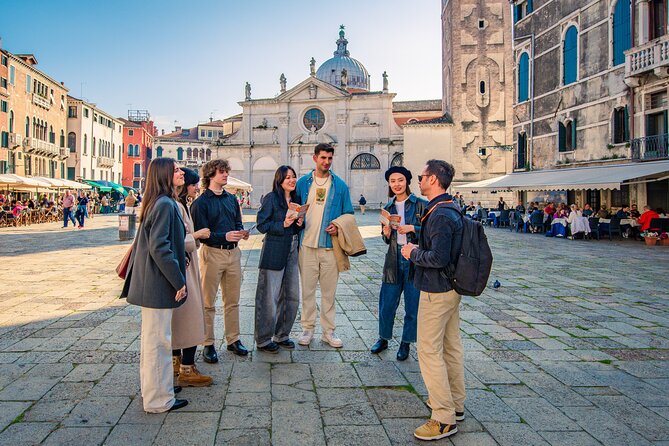
Venice reveals itself best at street level, where a narrow passage suddenly opens onto St. Mark’s Square or a quiet bridge crosses a dark canal. This experience combines that footwork with the city’s famous gondola tradition, giving you two very different views of Venice in about three hours.
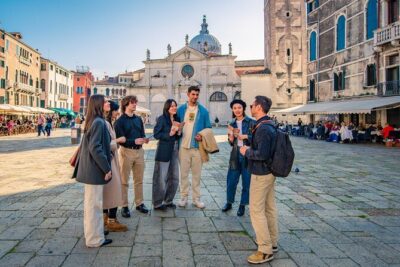
I like the small-group format, which makes it easier to hear a guide and ask questions than on a large coach tour. I also like the route’s range: the Grand Canal, Rialto Bridge, Doge’s Palace, the Bridge of Sighs, La Fenice, and the square all appear in one introduction.
The main caution is pace. The tour begins at Santa Lucia railway station, and some groups have spent a large part of the outing walking toward the gondola. Guides Julian and Elisabeth have earned especially warm praise, but the experience can depend heavily on who leads the group and how quickly that person moves.
Key points to know before booking
- The tour begins at Santa Lucia station: Plan extra time to find the meeting point and expect walking right from the start.
- The three-hour schedule covers a lot: You see major landmarks, but most stops are exterior visits rather than full museum entries.
- The gondola ride is included: It is a traditional shared gondola experience, not a private boat reserved only for your party.
- Julian and Elisabeth received the strongest praise: Their personal attention and help with transport added real value for some groups.
- The pace may be brisk: Comfortable shoes are essential, and there may be few natural rest breaks.
- Check the group-size details: The information gives both a maximum of 14 and a maximum of 8, so confirm the actual limit before paying.
Why this makes a useful first look at Venice
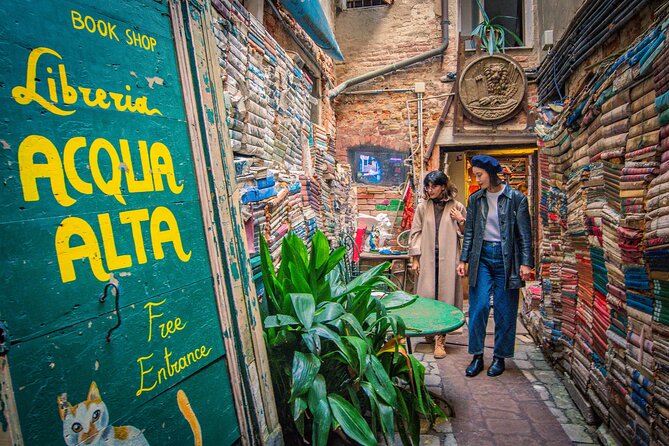
A first day in Venice can feel like a puzzle. The city has no normal street grid, cars stop at the edge of the historic center, and famous sights sit behind layers of lanes, bridges, and canals. A guide can help you connect the pieces quickly.
This walk starts at Venice Santa Lucia railway station, a practical point if you arrive by train. From there, the route introduces the Grand Canal, St. Mark’s Square, the Rialto Bridge, and several landmarks around the political and religious heart of the old republic. You also get time on a gondola, an experience that shows Venice from the water rather than from another crowded pavement.
I see this as an orientation tour, not a full sightseeing day. The itinerary lists about 30 minutes at several important locations, but admission to the Campanile, Doge’s Palace, the Clock Tower, and La Fenice is not included. You should expect explanations and outside views, not a guided interior visit to all of them.
The listed price is $185.38 per person. That is a serious cost for three hours, especially if you are traveling with a family. The value rests in the combination of a guide and the included gondola ride. If you plan to take a gondola separately and already know your way around Venice, the price is harder to justify. If this is your first visit and you want a quick framework for the city, the convenience may be worthwhile.
More Gondola Rides with a Walking Tour in Venice:
- Venice Walking Tour and Gondola Ride
★ 3.5 · 3,630 reviews - Venice: City Center Walking Tour & Iconic Gondola Ride
★ 4.3 · 500 reviews - Venice: Walking Tour and Shared Gondola Ride
★ 4.1 · 466 reviews
From Santa Lucia station to the Grand Canal
The meeting point is at Stazione di Venezia Santa Lucia, at the edge of the historic center. You return to the same general meeting point when the activity ends, so this is not a one-way tour that leaves you at St. Mark’s Square.
The first stop is the Grand Canal, Venice’s main waterway. It runs in a broad reverse-S shape for about 3.8 kilometers through the central districts, dividing the city into two parts before reaching the lagoon near the station and the basin at San Marco.
That geography matters. The Grand Canal is not just a pretty water view. It explains why Venice was built as it was, with bridges and water routes taking the place of ordinary roads. A guide can point out how the city’s major districts relate to one another, which helps you navigate after the tour.
One practical concern comes from the start point. Some groups have found that the first part of the outing involved a long walk from the station toward the gondola. Since Venice can be crowded and noisy, it may be hard to hear a guide while moving through the busiest lanes. I would arrive ready to walk without stopping often.
St. Mark’s Square and the center of Venetian power
Piazza San Marco is the city’s great public room. Venetians usually call it simply la Piazza, while the smaller section toward the lagoon is the Piazzetta. Together, these spaces formed the religious, political, and social center of Venice.
The tour allows about 30 minutes here. That is enough to get your bearings, hear the basic story of the square, and look closely at the surrounding buildings. It is not enough for a slow architectural study, a café stop, or a full visit to every nearby attraction.
The Basilica of San Marco anchors the square. Its present structure dates to the latter part of the 11th century, and later additions gave the façade its famous ornamented appearance. The itinerary gives about 30 minutes for the area around the basilica and Campanile, but admission to the Campanile is not included.
That distinction is easy to miss when comparing tours. You are being guided through the setting, not automatically taken up the bell tower. If climbing the Campanile is important to you, you will need to arrange a separate visit and allow more time than this three-hour schedule provides.
The Clock Tower, or Torre dell’Orologio, occupies the north side of the square at the entrance to the Merceria. The tower and its adjoining buildings form one of the square’s most recognizable Renaissance details. The planned stop is brief, around 10 minutes, so you will likely hear its story while viewing it from outside.
The Bridge of Sighs and the Doge’s Palace
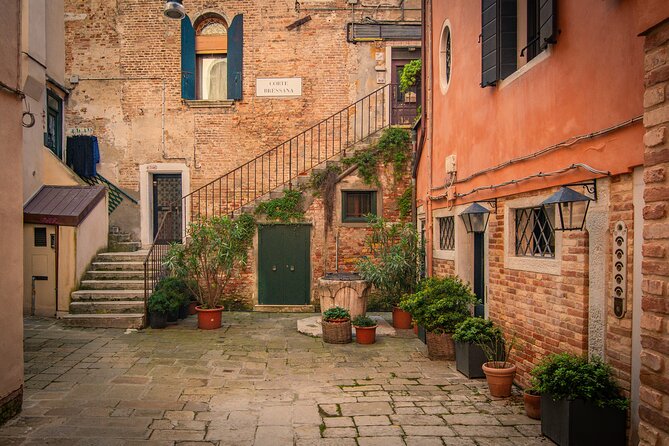
The Bridge of Sighs is one of Venice’s most distinctive bridges because it is fully enclosed. Built in 1602 from white Istrian stone, it connects the Doge’s Palace with the New Prisons. Its two separate corridors carried prisoners between the palace and the prison complex.
The tour allows about 30 minutes at this area. That should give you time to view the bridge, understand its purpose, and take photographs from the surrounding waterways or bridges. The famous name often gets a romantic treatment, but its original function was practical and grim. That contrast is exactly the sort of detail that makes a good walking guide useful.
The Doge’s Palace was the home of the Doge, the highest authority in the former Venetian Republic. It is built in the Venetian Gothic style and now operates as a museum. Admission is not included, so the tour does not replace a palace visit.
I would not book this experience expecting to see the palace interiors. You will get context for the building and its role, then you can return later if you want the grand rooms, prison passages, and artwork inside. For a first orientation, that can work well. For someone with only one day in Venice, it may feel frustrating to be close to the palace without entering.
More Gondola Rides in Venice:
- Venice: Grand Canal Gondola Ride with App Commentary
★ 4.1 · 23,020 reviews - Venice: Grand Canal Gondola Experience with Live Commentary™
★ 4.2 · 16,504 reviews - Venice: Shared Gondola Ride Across the Grand Canal
★ 3.9 · 6,645 reviews - Grand Canal Gondola Experience with Live Commentary™
★ 4.0 · 4,223 reviews
Rialto Bridge and the city’s waterborne structure
The Rialto Bridge is the oldest of the four bridges crossing the Grand Canal. It links the San Marco and San Polo districts and has been rebuilt several times, including earlier versions made with boats and later timber structures. The stone bridge you see today dates to 1591.
The itinerary assigns about 30 minutes to the Rialto area. This is one of the more useful stops because the bridge is both a landmark and a working crossing. From here, the Grand Canal’s role as Venice’s main route becomes clear.
The area can be crowded, and the bridge itself is not a quiet viewing platform. Keep your belongings secure, stay aware of other people, and listen closely when the guide pauses. If the group keeps moving, you may get more useful commentary than sightseeing time.
This is also where the walking portion can feel like a workout. Venice has many bridges and no easy flat route between every sight. Comfortable shoes are not a minor suggestion here. The schedule contains several major stops, and the pace may leave little room to rest.
La Fenice and the final cultural note
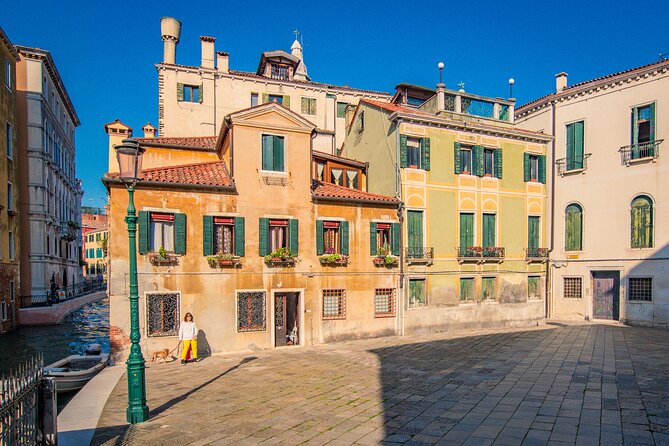
Teatro La Fenice is one of Italy’s best-known opera houses. It became especially important in the 19th century, when works by Rossini, Bellini, Donizetti, and Verdi received premieres or performances there.
The planned stop lasts about 10 minutes, and admission is not included. You should treat it as a quick exterior introduction rather than an opera-house visit. If you care about music or theater, this short stop may spark a separate visit.
The route ends with the Venetian Lagoon, the enclosed section of the Adriatic Sea surrounding Venice. The lagoon explains the city’s unusual setting and why the gondola is more than a tourist symbol. Water has always been part of daily movement, trade, defense, and identity here.
What the gondola ride is really like
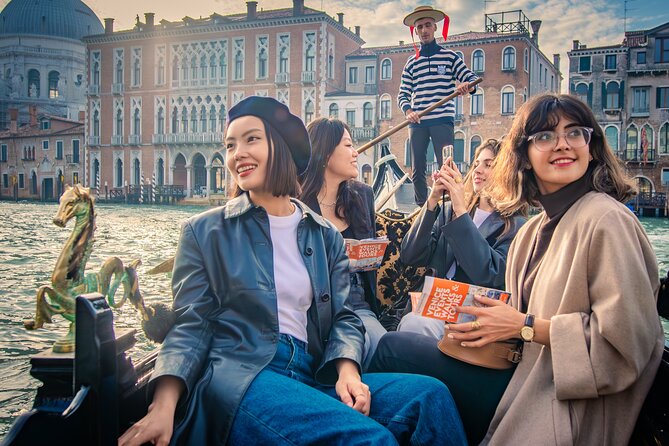
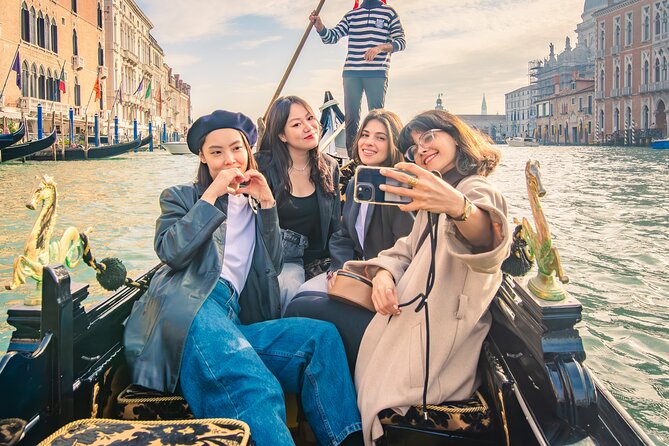
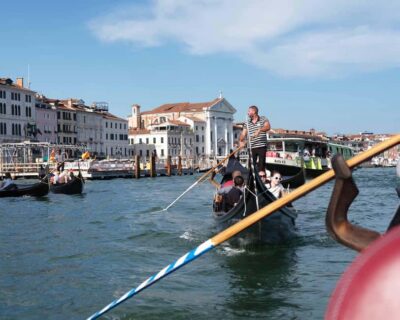
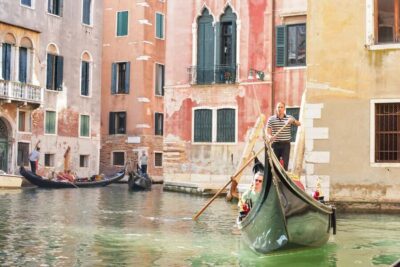
The traditional gondola ride is included, and it is the experience’s most immediately memorable feature. You sit low on the water while the gondolier steers through Venice’s canals. The ride gives you a pause after the walking and a different angle on the city’s bridges and buildings.
Do not assume the gondola includes singing. One group specifically found that its gondolier did not sing, and another had trouble hearing information because of microphone interference. The listing promises a traditional gondola ride, not a musical performance or a private gondola with a dedicated commentary system.
The gondola also appears to be part of a larger tour schedule rather than a fully flexible boat outing. One guide, Julian, was praised for making sure the group reached the gondola, then returning to continue the walking tour. That detail matters because the handoff between walking guide and gondolier may affect how smooth the experience feels.
If your main goal is a long, quiet boat ride, compare this with a stand-alone gondola booking. If you want a short ride as part of a broader introduction to Venice, the combination makes more sense.
The guides can shape the whole experience
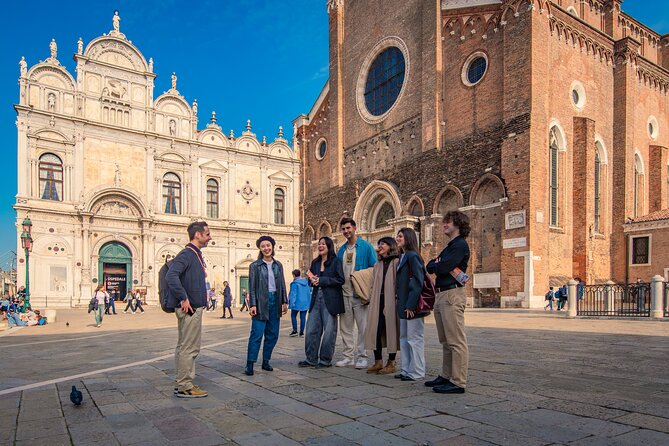
The strongest personal praise goes to Julian and Elisabeth. Julian was described as engaged, clear, and willing to adjust attention to what mattered to the group. He also helped with water taxi and people mover connections after the tour, a useful kindness if you are still learning how Venice’s transport system works.
Elisabeth was praised for explaining Venice and the surrounding area in a way that helped the group follow the cultural background. Those names are useful when you receive your confirmation, though guide assignments can change.
The more serious concern is uneven pacing. Some groups found the guide moved too quickly, offered few stops, and gave no real rest breaks. Another group felt the first hour was spent walking from the station to the gondola, leaving less time for clear explanations of the sights.
I would ask for the meeting details before the day of the tour and arrive early. The company says it contacts customers the day before to confirm the arrangements, but one customer still had trouble finding the guide and missed the gondola. Save the contact information and read the final instructions carefully.
The tour requires at least two people per booking. The group-size information is inconsistent, listing both a maximum of 14 and a maximum of 8 participants. That is worth confirming because group size affects how easily you can hear and how quickly the guide can respond to questions.
Who should book this Venice experience
This tour suits you best if you are visiting Venice for the first time, want the major landmarks explained, and like the idea of combining a walk with a gondola ride. It is also useful if you arrive by train and want to begin at Santa Lucia station.
It may suit families and mixed-interest groups because the route covers architecture, political history, opera, bridges, and canals in one outing. Still, the pace could be difficult for anyone who needs frequent rests. The tour information says most people can participate, but it also recommends comfortable shoes, and the feedback makes clear that the walking can be demanding.
You might choose another option if you want extensive interior sightseeing. The listed admissions to the Campanile, Clock Tower, Doge’s Palace, and La Fenice are not included. You should also compare prices if the gondola is your only priority.
The activity offers free cancellation up to 24 hours before the start time. Changes or cancellations inside that window are not accepted for a refund. Day visitors should also check the Venice access-fee rules, since a €5 fee may apply on certain dates to people staying outside the city.
Should you book the $185.38 tour?
Book it if you want a broad first introduction and value having a guide connect the sights for you. The gondola ride adds a distinctly Venetian moment, while the route gives you enough context to return later to the Doge’s Palace, basilica, or La Fenice on your own.
I would not book it blindly. Confirm the meeting instructions, ask about the current group limit, and be prepared for brisk walking. If the guide is as attentive as Julian or Elisabeth, the tour can be a useful and enjoyable start. If your group is rushed or the gondola connection is poorly handled, three hours may feel thin for the price.
FAQ
How long is the Venice Walking Tour and Gondola Ride?
The experience lasts approximately three hours.
Where does the tour begin?
It begins at Stazione di Venezia Santa Lucia, 30121 Venice, in the Metropolitan City of Venice.
Where does the activity end?
The activity ends back at the meeting point.
Is the gondola ride included?
Yes. A traditional gondola ride is included in the experience.
Are food and drinks included?
No. Food and drinks are not included.
Are attraction admission tickets included?
Admission is not included for the Campanile di San Marco, Torre dell’Orologio, Doge’s Palace, or Teatro La Fenice. The itinerary lists the Grand Canal, St. Mark’s Square, the Bridge of Sighs, and Rialto Bridge as free-entry stops.
How many people can join the tour?
The information gives two different maximum group sizes, 14 people and 8 people. Confirm the current limit when booking.
Is there a minimum number of people per booking?
Yes. A minimum of two people per booking is required.
Can I cancel for a full refund?
Yes, if you cancel at least 24 hours before the experience start time. Cancellations made less than 24 hours in advance are not refunded.
Newest rides around Venice
- Venice: Vip Semi-Private Walking Tour with Gondola Ride★ 4.5 · 17 reviews
- Venice: Walking Tour & Gondola Ride★ 4.4 · 22 reviews
- Venice: Private Tour with Doge’s Palace, St. Mark’s, Gondola★ 5.0 · 7 reviews
- Venice: Romantic Palace Dinner and Private Gondola Ride★ 4.7 · 6 reviews
- Venice: St. Mark’s Basilica Guided Tour and Gondola Ride★ 4.5 · 2 reviews
- Venice: Private Evening Stroll with Gondola Ride★ 5.0 · 2 reviews
- Venice: Private Photoshoot In Gondola★ 5.0 · 13 reviews
- Private Venice Walking Tour and Gondola Ride★ 4.3 · 3 reviews
Gondola Rides with a Walking Tour, compared.
Winter Walking Tour & Romantic Gondola Ride Upgrade
Read our review →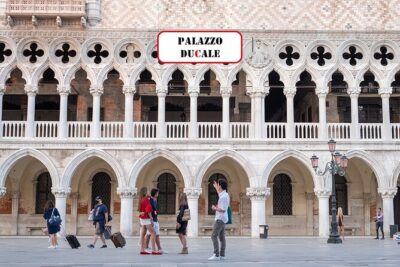
Unusual Venice Walking Tour through Rialto & Gondola Experience
Read our review →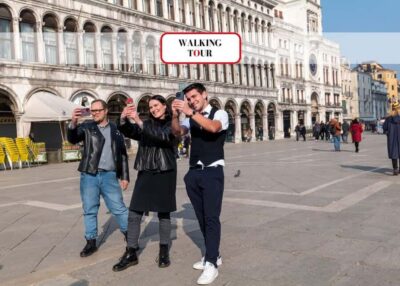
St Mark’s Square & Rialto Walking Tour & Gondola
Read our review →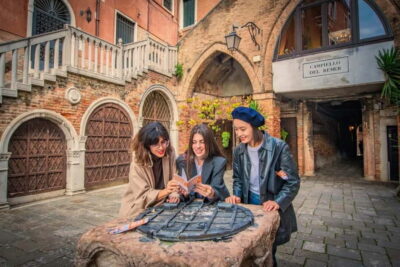
Private Walking Tour with Optional Gondola Ride
Read our review →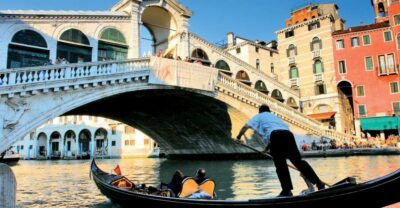
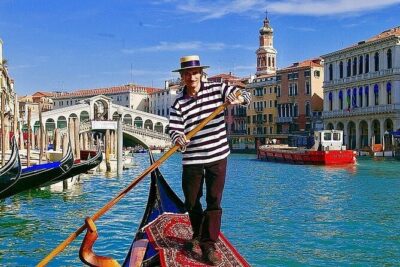
Enchanting Venice: City Walk & Majestic Gondola Ride!
Read our review →Where this ride is listed