
Review · GONDOLA RIDES WITH A WALKING TOUR
Venice Walking Tour and Gondola Ride Combo
Venice makes more sense when you see it from both levels: on foot, where narrow lanes reveal the old trading city, and from a gondola, where palaces and churches slide past at water level. This walking tour and gondola ride links St. Mark’s Square with the Rialto area, then sends you through quieter canals away from the main Grand Canal.
I like the route for two reasons. First, it gives you a useful introduction to Venice without spending a full day on a formal tour. Second, the gondola is included for $80, which can make good financial sense if you already want that classic Venetian ride. The main caution is timing: some guests received closer to two hours total, and one gondola ride lasted only 19 minutes on the water.
Key points to know before booking
- The route connects St. Mark’s Square and the Rialto area, with stops near Marco Polo’s former home, Campo Santa Maria Formosa, the Mercerie, and La Fenice.
- The gondola portion lasts 30 minutes in the advertised plan, but actual ride time can be shorter if canal traffic or disembarkation cuts into the outing.
- The walking tour is strongest with a good guide, with Gina and Stephanie singled out for lively, clear presentations.
- You see Venice away from its grandest sights, including smaller streets and canals that many first-time visitors miss.
- Groups may be split into gondolas of up to five people, so larger parties will not necessarily ride together.
- Winter tours from November 1 through March 31 are bilingual, and the gondola ride has no spoken explanation.
What this Venice combination tour actually covers
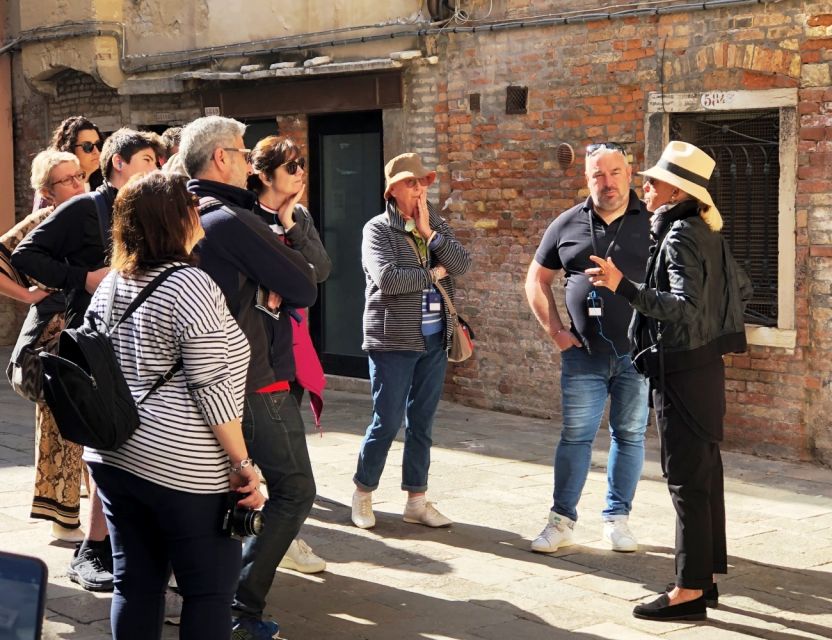
This is not one continuous three-hour tour in the usual sense. It combines a 1.5-hour guided walk with a separate 30-minute gondola ride, with the full schedule including the time between the two parts. That distinction matters if you are planning museum visits, a restaurant booking, or a train connection afterward.
The meeting point is on Calle larga de l’Ascension, near the post office and behind the Correr Museum. A TURIVE staff member checks your voucher there. Since St. Mark’s Square can feel confusing even when you are standing close to your destination, allow time to find the exact street rather than cutting it close.
The walking portion is offered in English, Spanish, French, and German. From November through March, it becomes bilingual, so you may hear two languages during the same presentation. That can make the pace feel slower, but it is useful to know before booking.
More Gondola Rides with a Walking Tour in Venice:
- Venice Walking Tour and Gondola Ride
★ 3.5 · 3,630 reviews - Venice: City Center Walking Tour & Iconic Gondola Ride
★ 4.3 · 500 reviews - Venice: Walking Tour and Shared Gondola Ride
★ 4.1 · 466 reviews
St. Mark’s Square sets the scene
The walk begins in the heart of Venice’s former political and religious center. You get views of St. Mark’s Basilica, with its Byzantine-style façade, and the Doge’s Palace, the great Gothic building that once housed the Venetian government and courts.
The tour does not include entry into either building. That is a limitation, but also a practical choice. You can admire the exteriors without committing several hours to queues and interior rooms. If you plan to visit the basilica or palace separately, this walk gives you the setting first, then lets you return later with a better sense of what you are seeing.
The guide’s role here is less about ticking off famous façades and more about explaining how the Venetian Republic functioned. The supplied details promise curious stories about the city’s government and trade, and the strongest feedback focused on guides who made those facts lively rather than dry.
That makes the quality of the guide important. Gina was praised for being funny and informative, while Stephanie was singled out as an especially strong guide. Your experience can depend on who leads the walk and how easy it is to hear them in crowded streets.
Campo Santa Maria Formosa and Marco Polo’s Venice
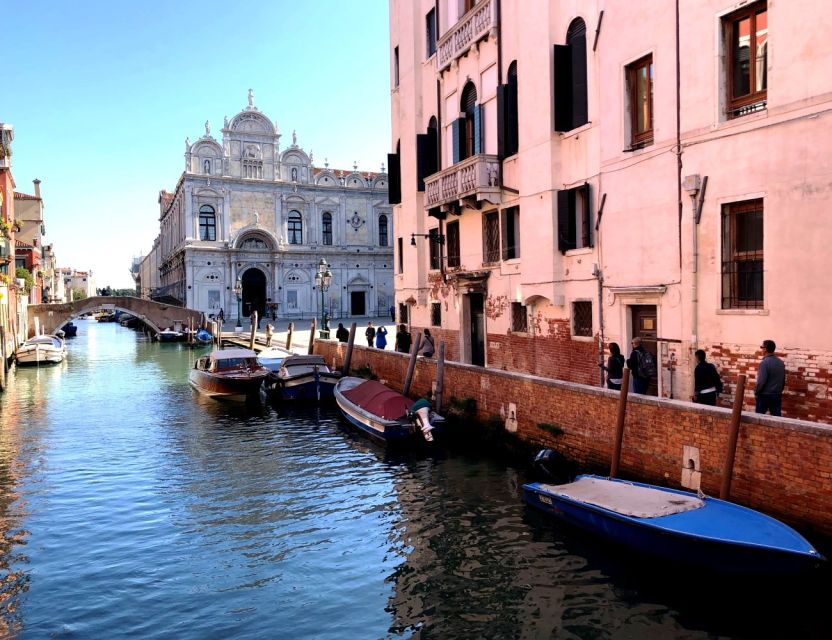
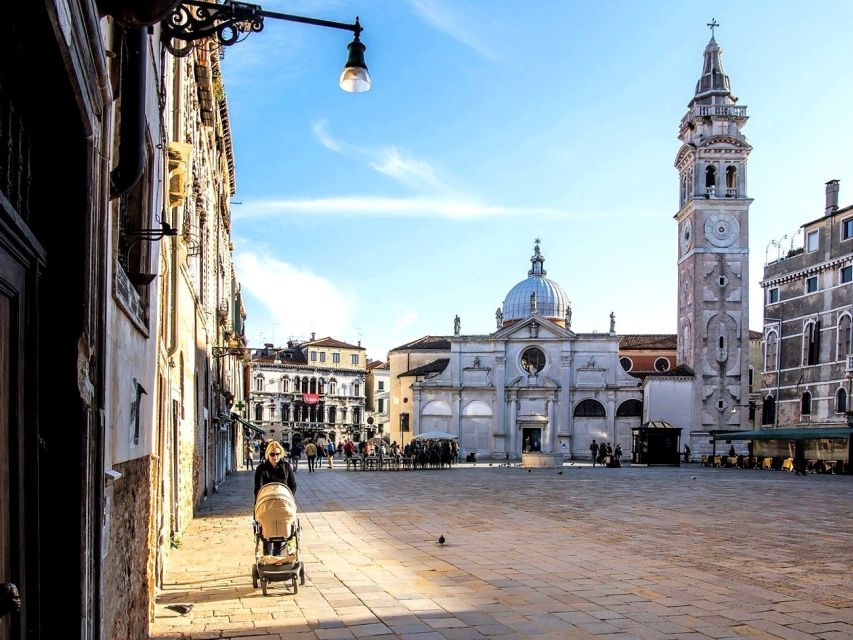
From the square, the route heads toward Campo Santa Maria Formosa. A campo is a Venetian square, often less formal than a grand European plaza, and these spaces help you see how daily life once worked around churches, homes, and small shops.
The church of Santa Maria Formosa is included for its striking appearance and story. You see it from outside, learning why it is regarded as one of Venice’s most beautiful churches. This is the sort of stop that benefits from a guide because the building can otherwise become one more elegant façade in a city packed with them.
You also pass the former home of Marco Polo. The stop does not mean you enter a preserved house filled with his belongings. Instead, you get a physical connection to the merchant and explorer associated with Venice’s far-reaching trade routes.
That detail fits the route well. Venice was not simply a city of canals and palaces. It was a trading power that brought goods and ideas from distant markets. The walk keeps returning to that commercial past, especially when it reaches the Mercerie.
The Malibran Theatre and the narrow Mercerie
The Malibran Theatre appears along the way. It is known for having one of the city’s most extravagant stages, adding a performance-history stop to a route otherwise centered on politics, religion, and trade.
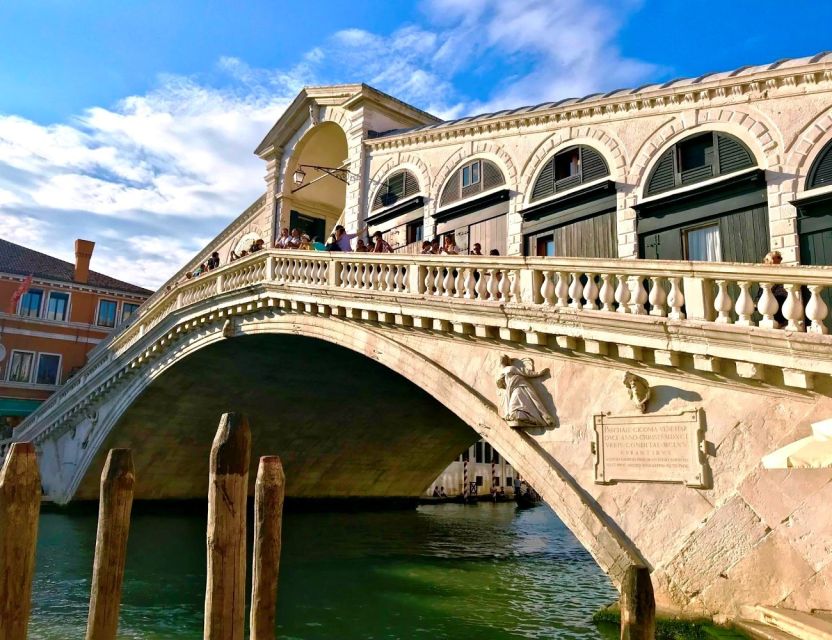
Then the walk enters the Mercerie, the narrow shopping streets between St. Mark’s Square and Rialto. These lanes once carried valuable goods from far-off markets, and they remain one of the best places on this itinerary to understand Venice as a working commercial city.
The Mercerie is also where the tour’s compact design becomes clear. You are not wandering without direction. You are following the old movement between government, worship, theater, and trade, with the streets themselves providing the link.
One point to watch: the route does use some of the main pedestrian paths between St. Mark’s and Rialto. A few people wanted more side lanes and a longer walk. Others liked the easy pace and found it a good first introduction. If you want a highly detailed tour of obscure corners, this may feel brief. If you want to get your bearings without wearing yourself out, the length works well.
More Gondola Rides in Venice:
- Venice: Grand Canal Gondola Ride with App Commentary
★ 4.1 · 23,020 reviews - Venice: Grand Canal Gondola Experience with Live Commentary™
★ 4.2 · 16,504 reviews - Venice: Shared Gondola Ride Across the Grand Canal
★ 3.9 · 6,645 reviews - Grand Canal Gondola Experience with Live Commentary™
★ 4.0 · 4,223 reviews
La Fenice gives the walk a dramatic finish
The itinerary includes the unusual façade of La Fenice Opera House. La Fenice means the phoenix, an apt name for a theater with a long story of survival and renewal. You see the exterior rather than attending a performance or touring the building.
This is one of the route’s more distinctive sights. St. Mark’s Basilica and the Doge’s Palace are obvious stops, but La Fenice gives you a different side of Venice, one connected to opera, stagecraft, and the city’s grand cultural life.
The walk is not a full architectural tour, so you should expect concise explanations and time to look rather than a long lecture at every stop. That balance keeps the tour manageable, though the tradeoff is less depth at individual sites.
Why the gondola route matters
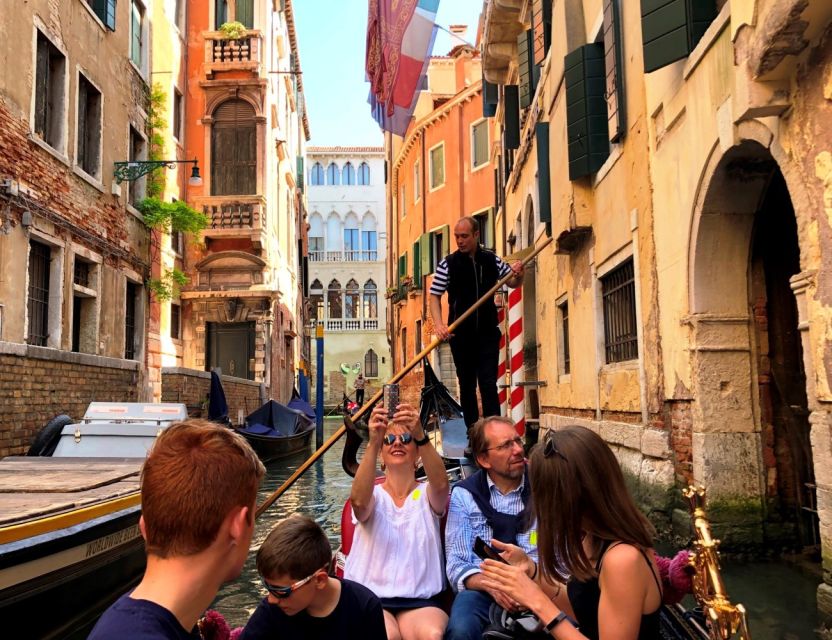
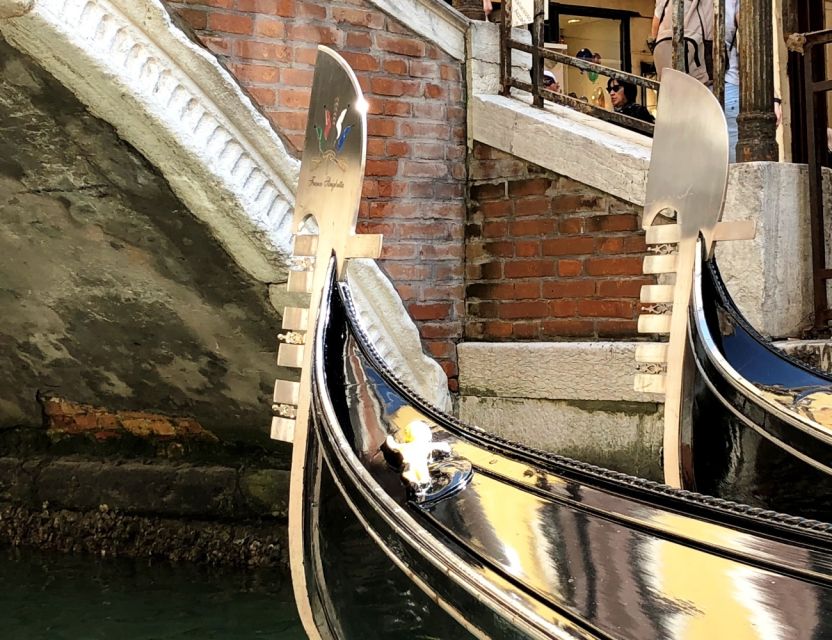
The second part is a 30-minute gondola ride. You board after the walking portion and move through smaller canals before reaching views of the Grand Canal and St. Mark’s Basin.
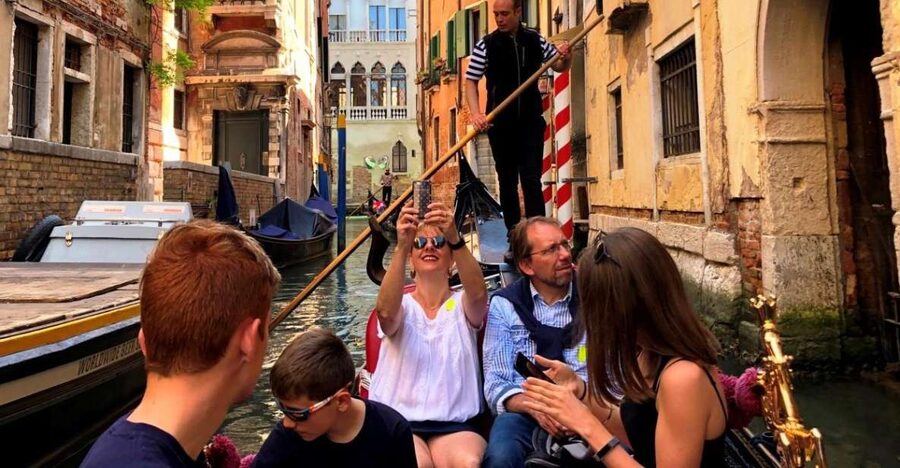
This is a better use of a gondola than treating it only as a photo prop. From the water, you see the lower façades of palaces, cramped canal entrances, and corners that are easy to miss from the street. The boat’s gentle motion also gives you a short break after walking over Venice’s bridges and hard paving.
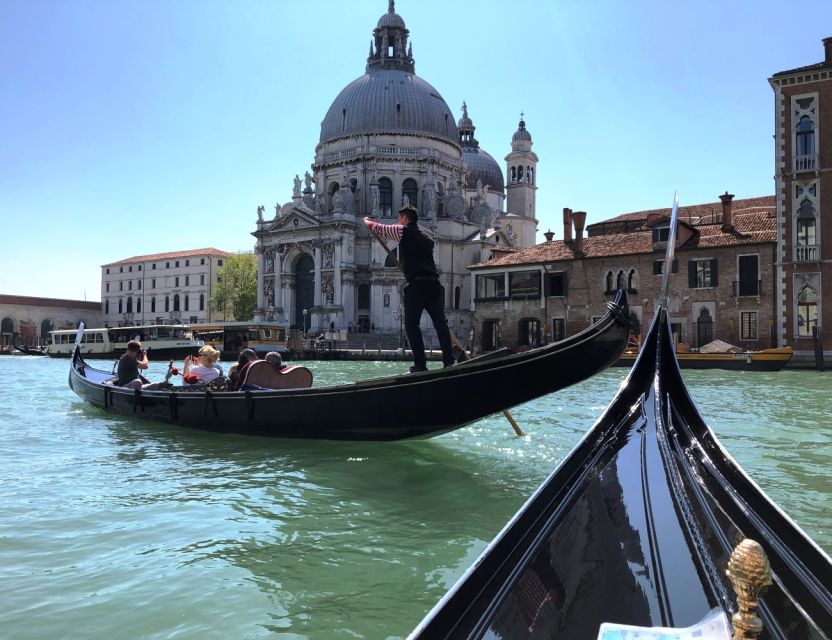
The route includes minor canals off the Grand Canal, then views toward the Basilica della Salute. That church is especially impressive from the water, where its broad façade and position near the lagoon read more clearly than they do from a narrow street.
You also reach St. Mark’s Basin and the start of the Grand Canal. This is the wide, open part of the ride, a useful contrast after the tight canals. The experience shifts from quiet passages to Venice’s grand water entrance.
There is no guide commentary during the gondola ride. You should treat this part as a visual and atmospheric break, not a second history lesson. If you want detailed explanations from the gondolier, this package will not provide them.
The timing issue is worth taking seriously
The advertised format is a 1.5-hour walk and a 30-minute gondola ride, within a total activity period of about three hours. One participant reported a total closer to two hours, while another said the gondola portion lasted 19 minutes before returning to the starting point, followed by a few more minutes before disembarking.
That does not mean every departure will be short. Canal traffic, loading arrangements, weather, and the way the operator measures the ride can affect the schedule. Still, the reports point to a real consideration: do not book this immediately before something you cannot miss.
The gondola can hold up to five people. If your booking contains more than five, your group will be divided among multiple boats. Couples and small families should be prepared to share, rather than expect a private gondola.
Bad weather can also suspend the gondola portion. The booking terms allow free cancellation up to 24 hours ahead, and you can reserve while paying later, which gives you some flexibility. Still, check the forecast and keep your plans loose around the ride.
Is $80 a fair price?
At $80 per person, the value depends on what you want from Venice. A guided walk gives you context for several major sights, and the gondola adds the city’s most familiar water experience without requiring a separate booking.
One useful point is that a gondola ride on its own can be costly, particularly if you are traveling as a small party and do not want to arrange the details yourself. Including the ride with a guided introduction can make this package a sensible first-day purchase.
The value is weaker if you already plan a long private walking tour or have arranged a separate gondola ride. In that case, you may be paying twice for similar services. It is also less attractive if your top priority is entering St. Mark’s Basilica, the Doge’s Palace, or La Fenice, since this experience focuses on exterior views.
For a first visit, I think the combination is strongest. You get a city orientation, several important landmarks, a few historical threads, and time on the canals. It is not a deep specialist tour, but it gives you enough structure to explore on your own afterward.
Who will enjoy this most?
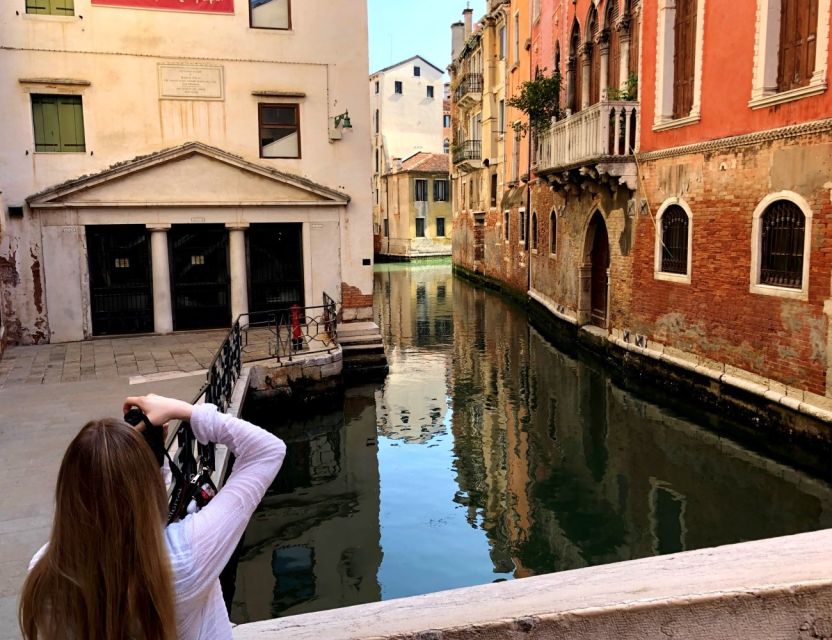
This works well for first-time visitors who want a clear introduction without committing to a full-day program. The walk is described as easy, and one early departure was especially appreciated for its small group size.
Families may like the mix of movement and boat time. The walking section is long enough to hold attention but short enough to leave energy for independent sightseeing. The gondola may be the part children remember most, though a shorter-than-expected ride could disappoint.
The tour also suits visitors who want to see Venice’s famous center but prefer more than a straight route between landmarks. The stops at Marco Polo’s former home, the Malibran Theatre, and the Mercerie add useful texture.
You may want something else if you use a wheelchair or have difficulty walking. The full route may not be accessible, and the combination of narrow streets, bridges, and canals can make movement hard. Ask the provider about your exact needs before booking.
Practical ways to get more from the experience
Arrive early at the meeting point near the Correr Museum. The location is central, but Venice’s lanes can turn a short distance into a small navigation puzzle.
Choose an early start if you can. A smaller group can make it easier to hear the guide and ask questions. This is especially useful because one person found the audio device unclear, and another had trouble understanding the guide at times.
Keep your expectations clear about the two sections. The walking tour provides the explanations. The gondola provides the views and quiet canal atmosphere, with no commentary.
Wear shoes suited to steady walking and bridges. The route crosses central Venice on foot, and the entire outing may take less than the stated three hours, but it still covers active city streets before you sit down in the boat.
If you are traveling with more than five people, accept that you will be divided among gondolas. The boat limit is five, so the group may not share the same ride.
Should you book this Venice tour?
Book it if you want a practical first look at Venice, like having a guide explain the city’s stories, and want to add a gondola ride without arranging two separate activities. The best parts are the route between St. Mark’s and Rialto, the Marco Polo connection, the Mercerie, and the change in viewpoint from street to canal.
Go in with realistic expectations. This is not an interior tour of Venice’s great monuments, the walk may feel short if you want side streets at length, and the gondola ride may not always deliver a full 30 minutes of moving time.
For most first-time visitors, I would consider it a good-value introduction, especially with an early departure and a flexible afternoon afterward. Use it to get oriented, then return to the sights that caught your attention.
FAQ
How long is the Venice walking and gondola tour?
The planned format is a 1.5-hour walking tour followed by a 30-minute gondola ride, with the overall activity listed as three hours. Actual timing can vary.
What sights are included on the walking route?
You see St. Mark’s Basilica and the Doge’s Palace from outside, then walk toward Campo Santa Maria Formosa, Marco Polo’s former home, the Malibran Theatre, the Mercerie, and La Fenice Opera House.
Is the gondola ride private?
No. Each gondola can hold up to five people. Groups larger than five are divided among separate gondolas.
Is there commentary during the gondola ride?
No explanations are provided during the gondola ride. The guide’s historical commentary takes place during the walking portion.
Which languages are available?
The tour is offered in English, Spanish, French, and German. From November 1 through March 31, the tour is bilingual.
Can the gondola ride be canceled because of weather?
Yes. The gondola ride might be suspended in bad weather.
Is the tour suitable for wheelchair users?
The full itinerary may not be accessible to wheelchair users or people with walking difficulties. You should confirm your needs before booking.
Newest rides around Venice
- Venice: Gondola Ride and a Gala Dinner in a Venetian Palace★ 4.8 · 17 reviews
- Doge’s Palace, St. Mark’s & Gondola Ride with Options★ 4.8 · 14 reviews
- Venice: Doge’s Palace and Basilica Tour with Gondola Ride★ 4.2 · 5 reviews
- Venice Highlights with Local: Private Walking Tour & Gondola Ride★ 4.5 · 30 reviews
- Venice: Private Gondola Ride with Photo Shoot★ 4.9 · 29 reviews
- Venice: Private Gondola Ride with Professional Photographer★ 4.9 · 30 reviews
- Venice: St. Mark’s, Walking Tour and Gondola Combo★ 4.2 · 48 reviews
- Enchanting Venice: Private Gondola Experience★ 3.5 · 38 reviews
Gondola Rides with a Walking Tour, compared.
Winter Walking Tour & Romantic Gondola Ride Upgrade
Read our review →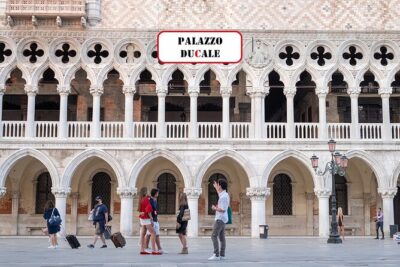
Unusual Venice Walking Tour through Rialto & Gondola Experience
Read our review →
St Mark’s Square & Rialto Walking Tour & Gondola
Read our review →
Private Walking Tour with Optional Gondola Ride
Read our review →
Wroclaw: Old City Walk and Cruise with Small Gondola
Read our review →Where this ride is listed